It's the best job in the world.
Or it could be, if you weren't drowning in the second job nobody prepared you for.
The one where you're constantly chasing people, hunting for information, revisiting decisions you made six weeks ago and somehow going entire days without doing anything creative.
I think we've become so good at managing the chaos that we've stopped questioning why there's so much of it.
You were never supposed to work like this
For years I told myself, and everyone else, that I thrive on stress. Now, whenever I'm up against a deadline, my friends remind me: "But you work better under pressure."
I hear versions of it from designers all the time and I don't think it's a personality trait anymore. I think it's what happens when you spend years in an industry where everything feels urgent.
Which is ironic, really, because from the outside interior design looks like the calmest job in the world. Everything beautifully considered and curated to within an inch of its life.
I know how calm you are too. Well, on the outside, anyway. The delays, the changes, the impossible requests. You just deal with them.
You're so good at holding everything together that nobody sees what it’s costing you.
That cost is time, then profit, then headspace, and sometimes your health.
I've spent 15 years in construction and the last five running operations inside interior design studios, in three countries. I've been the person hired to take some of that weight off your shoulders. So I know how heavy it gets.
The problem with running an interior design studio from your inbox
For most of us, the inbox has become the entire business. It's our communication system, filing cabinet, procurement tracker and to-do list, all in one place. Personally, that place puts me on edge.
You can start the morning with a perfect plan. Then you open your inbox, and your entire day is dictated by what's landed in it.
You answer 30 emails. You chase three suppliers. You spend 20 minutes finding a document you swear you filed and the client wants to reopen the dressing room doors you signed off in May.
That's your entire Wednesday but the design work you were excited to do hasn't been touched.
You've spent the whole day keeping the project from standing still, and you end the day feeling like you've achieved nothing.
Tomorrow, you'll probably do it all over again.
The work you're trying not to forget
Interior design is the most detail-heavy industry I've ever worked in. I wouldn't be exaggerating if I said you're carrying a thousand details per project in your head. If you've got three projects on, ouch.
The measurement the joiner promised for Friday. The client who said she'd decide on the lighting after the weekend. The sample that's been "on its way" for a fortnight. The grout colour someone definitely confirmed, somewhere.
None of it’s particularly difficult. It's just that all of it’s unfinished.
And somehow, you've become the place where every unfinished conversation lives, rent free, until it's finally resolved. Nobody told you to notice that when you opened the studio. You just did it.
So it's not the work that's exhausting you. It's everything you're trying not to forget while you're doing it.
Every studio has the same story, and we've all made peace with it. I'm here to tell you, you don’t have to any more.
Three minutes on a Sunday night
Last Sunday, the night before I went back to work after a week's holiday, I opened the hub on my phone and typed: "I've been away for a week. Catch me up."
Three minutes later, I knew what had changed, what was outstanding and exactly where to start on Monday. Every answer linked to its original source, down to the one email that mattered in a chain of fifteen.
I timed myself doing it the old way afterwards. Reading emails, making notes, working out what needed action.
21 minutes, and I still wasn't as well informed.
The time wasn't the point, though. The point was how calm I felt, on a Sunday night, before the first day back.
I cried. (I keep doing that with this thing, it’s that lifechanging).
From the demo hub, built on a real project with names and details changed.
So I built the software that remembers for you
It started as a client hub, because we wanted somewhere beautiful for clients to see their project, follow its progress and find answers without another email. Then I realised that before we could give the client a complete picture of her project, we needed one ourselves.
The Project Hub is an AI-powered workspace that already knows what's happening, because it's been following the project all along. Unlike every interior design project management system I've used, there's nothing to keep updated and nowhere to copy and paste into. I've spent the last eight weeks building and refining it on a real project in a studio where I already run operations, and it's built entirely around how we like to see information.
The best comparison I can make is your design boards. You can't really see how a room works together until you start layering the finishes, colours and materials. The hub does that for the entire project, so you can finally see the whole picture.
And trust me, this brings a whole new level of calm and ease.
Every room has its own record. Like the client who casually mentioned she didn't like pink, only for the bathroom scheme to come back pink anyway. (True story). If that conversation had been captured in the hub, her preference would have been there for anyone working on that bathroom to see.
You don't spend your evenings feeding it information. It knows everything from the work you're already doing.
Emails are labelled and logged. Attachments are renamed and filed. Meeting notes are written up and filed within 30 minutes of the call ending. Decisions keep their history, and nothing is ever deleted. You can ask it anything about the project and get an answer in seconds with a link to exactly where it came from. Nothing ever gets sent to a client. It drafts, and you press send.
The hub holds the memory. The judgement stays with you.
Underneath it all there's a Google Drive folder, one Google Sheet, your inbox and the hub itself, on your laptop or phone. The running costs are pennies. The investment is in building it around how your studio actually works.
The Friday email, and the afternoon spent proving you did the work
On almost every call I have with an interior designer, the Friday client update comes up. I used to find that strange. Then I realised why.
So much of what you do is invisible to the client. The calls, the chasing, the problems solved before they ever became problems. The weeks she hears least from you, usually in detailed design, are often the weeks you're doing the most for her.
Good client communication makes her feel like she's your only client. Which is exactly how you want her to feel.
One designer told me she dreaded Fridays. She'd spend hours piecing together five or six updates from notebooks and inboxes. Some weeks 5pm arrived and she still hadn't finished.
She'd been working incredibly hard all week. She'd done so much for her clients. And now she had to spend hours proving it.
In the hub, it's a button. Press "Draft the client's weekly update" and it pulls together the week's emails, meetings and documents, with the sources beside it so you can check the details. You review it, add your own warmth and send it yourself.
Protecting your profit
You know almost to the hour how long the design part of a project will take.
What you don't price for are the afternoons revisiting a decision from six weeks ago, or the time spent getting your head back into a project after the client went quiet for two months.
You finish the project convinced you didn't charge enough. But the design probably wasn't what ate your profit. It was the hours spent finding, remembering and revisiting work you'd already done.
Just one hour a week across three projects, at £100 an hour, is £15,600 of your time in a year and wee both know it's more than an hour.
It’s hundreds of small moments, and nobody counts them. We’re too scared to.
So I taught the hub to count them in a real project. I gave it the signed contract and it split the fee into phases. Each week I add our hours at each person's real rate, plus anything paid out, and every Monday there's a bar showing each phase against its fee. It's already made us pull back on one phase, in time to do something about it.
What could you do with your time back?
I've spent years working for interior designers, and in building this hub I'm effectively putting myself out of a job. This makes me happy.
Because there are far more valuable things I could be helping my clients with in that time.
Just imagine what you could do with yours.
Fridays kept clear for design development. Full days for sales and marketing. Networking. The feast-and-famine cycle so many small studios get stuck in finally breaking, because you have time to find the next project while you're still delivering this one, rather than when finding it has become urgent.
You can't build the business you want when every hour goes on keeping the business you've got running.
This is your no-brainer opportunity to create your entire business by design.
It's time for a change. I'm putting my foot down
I don't want to get better at managing chaos and I don't want that for you either.
You're brilliant at designing beautiful spaces. Why have we accepted such a messy way of running the projects behind them?
I've spent years helping designers manage the chaos, accepting that this was just how things worked. For the first time, I can see that it doesn't have to be.
Or, if you'd rather talk it through, book a call and I'll walk you round it.
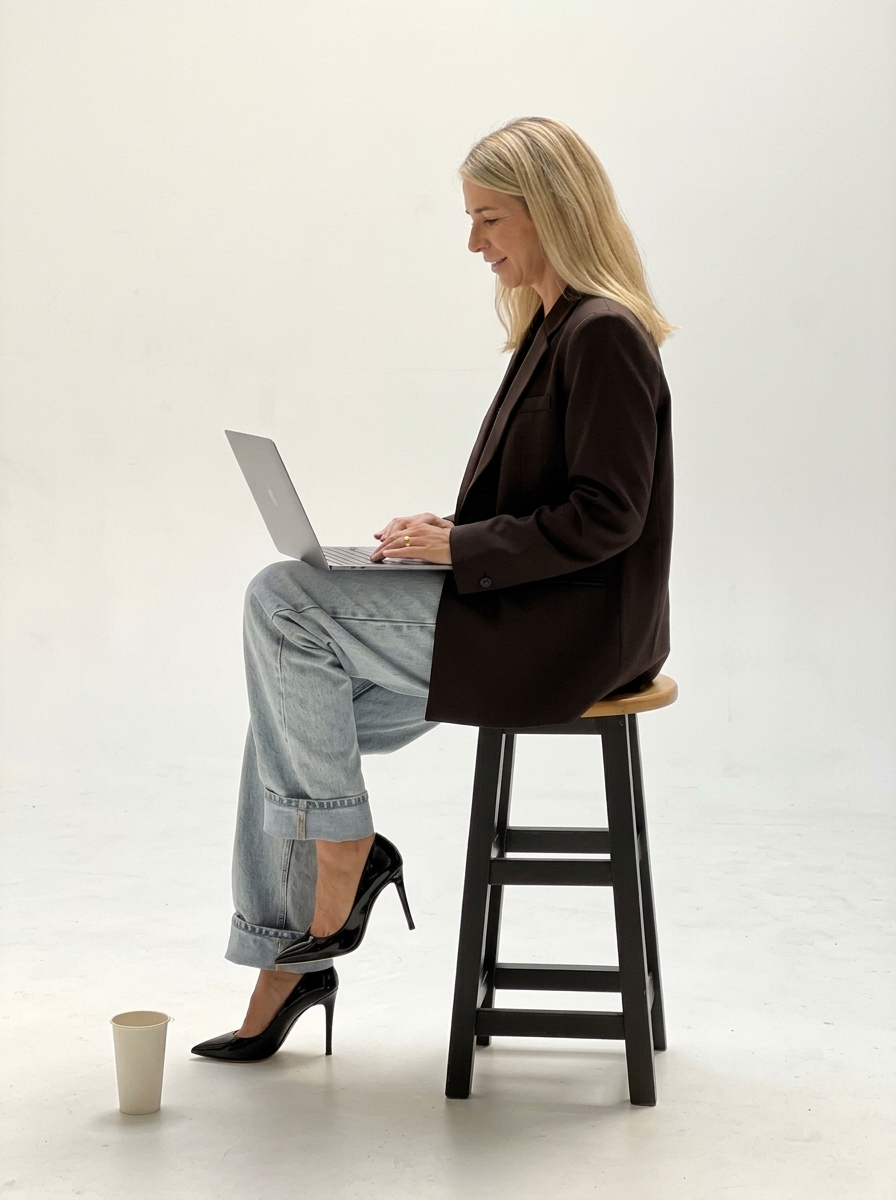
Tara xX
I’ve spent the last 5 years saying there must be a better way and now that way is better that I could have ever imagined. This has the power to change everything for designers and let you live a life of art, beauty and creativity…you know, the one you visualised when you started all this. Not the chasing, the investigating and living the same day on repeat.